Why "wide" shoes still squeeze a bunion, and the shape that finally does not
There is a sentence that comes up over and over when women over fifty talk about their feet on the forums. It goes something like this: my feet are fine barefoot. They only hurt inside shoes.
One woman, 65, on her feet eight to twelve hours a day, put it plainly: they are not painful when she is barefoot. The problem is wearing shoes, and what hurts most are the third, fourth and fifth toes. Not the bunion itself. The toes the bunion pushes into the wall of the shoe.
If that is you, you have probably done the obvious thing. You bought "wide". Maybe a D, maybe a 2E. Maybe the wide version of the big cushioned running shoe everyone recommends. And it still squeezed, because of something the size chart never tells you.
Wide is a width. A bunion needs a shape.
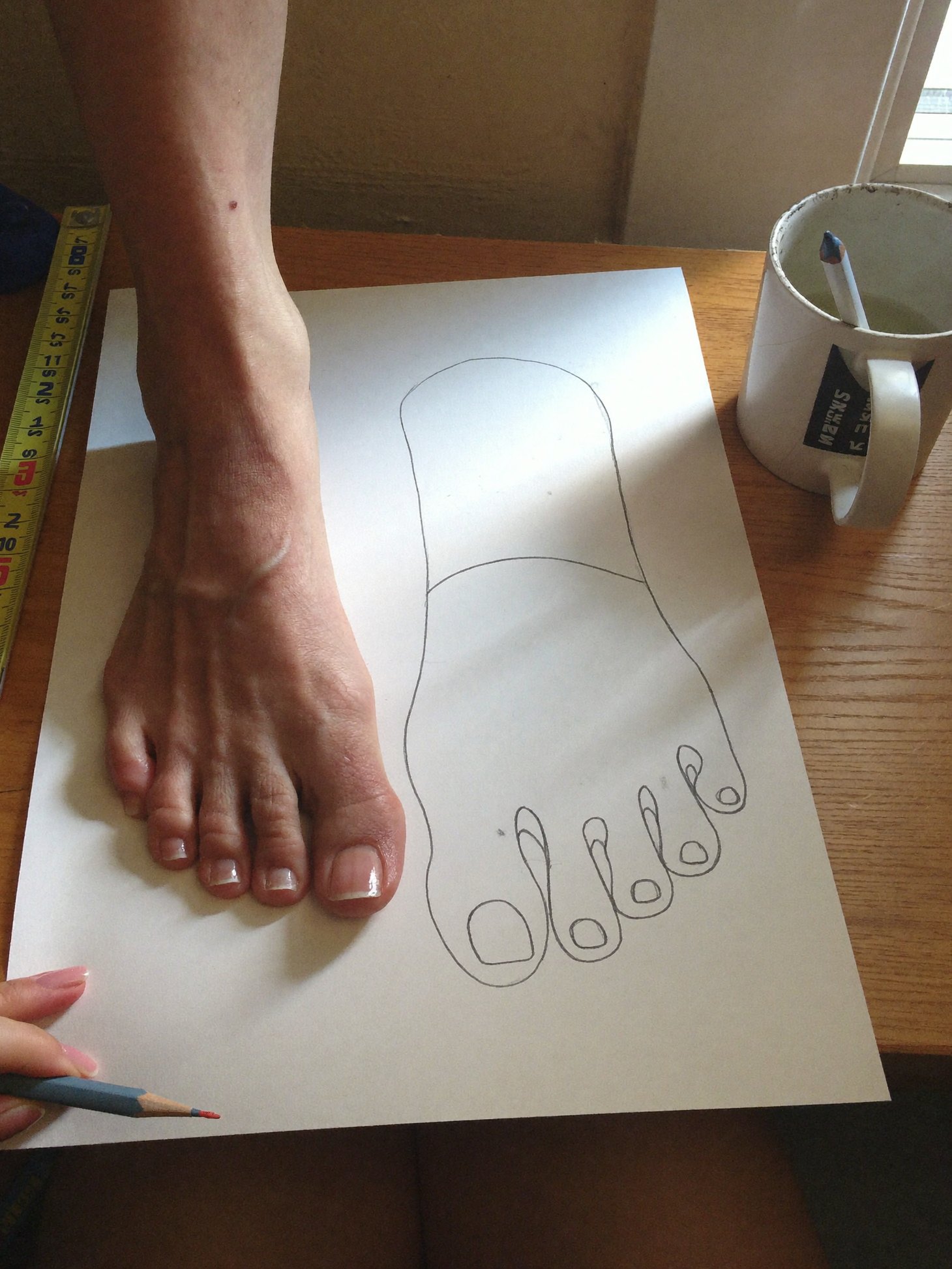
Look at the outline of a foot on a sheet of paper. It is widest at the toes. Now look at the outline of almost any sneaker, wide or not. It is widest at the ball and it tapers to a point where the toes are. A wide shoe is the same tapered shape, scaled up. It gives you room at the ball, where you did not need it, and takes it back at the toes, where the bunion is.
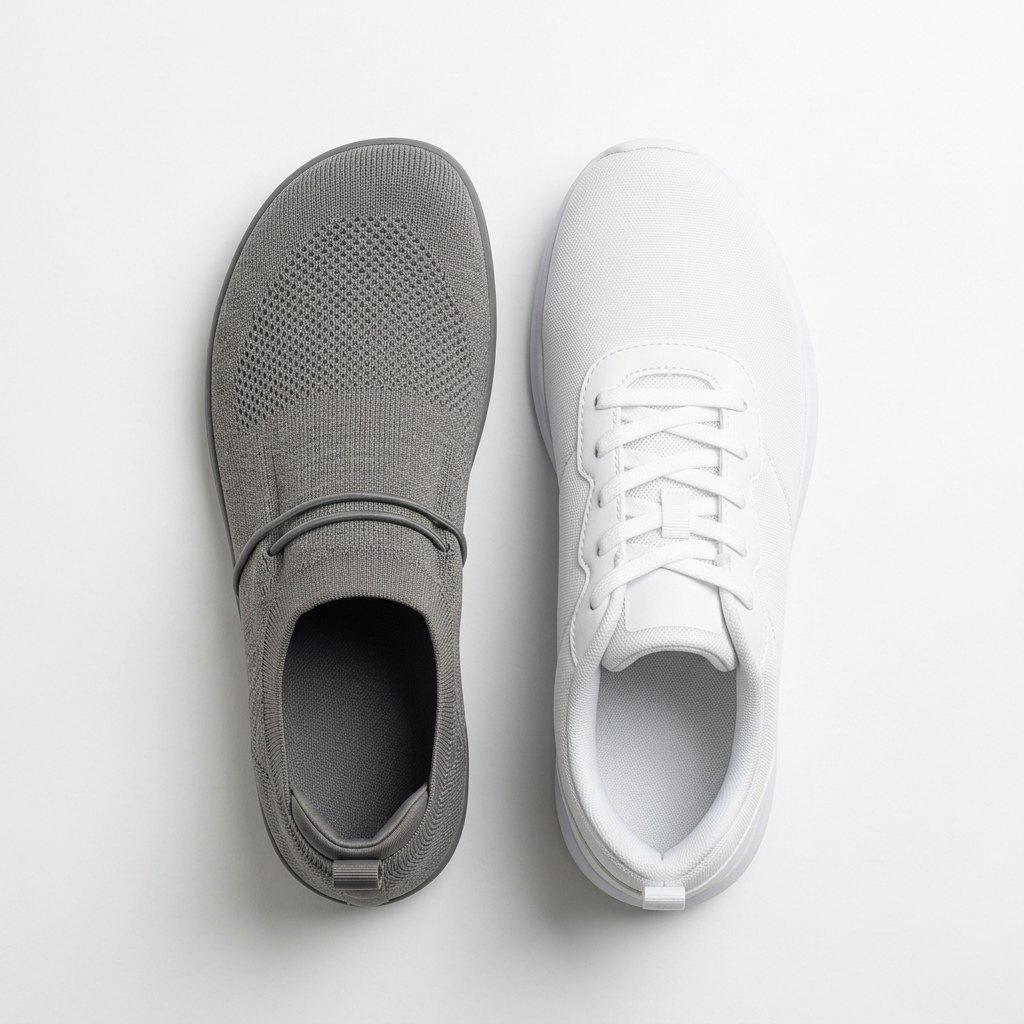
That is why a woman on a plantar-fasciitis board wrote that even the shoe brand famous for wide toe boxes "can still be tight in the area at the base of toes, where the bunion is." And why a nurse on a nursing forum wrote that athletic shoes "taper at the tip so my poor pinky toe is all red by the end of the shift."
The complaint is never "not wide enough." It is "wrong shape." Those are different problems, and only one of them is fixed by a bigger size.
The $700 lesson
The other pattern in those threads is money. Two hundred dollars on the cushioned shoes. Two hundred and twenty on custom orthotics. Ninety-five on memory-foam sneakers. Forty on the Amazon pair with five stars. One woman added it up at over $700 in shoes that did not help.
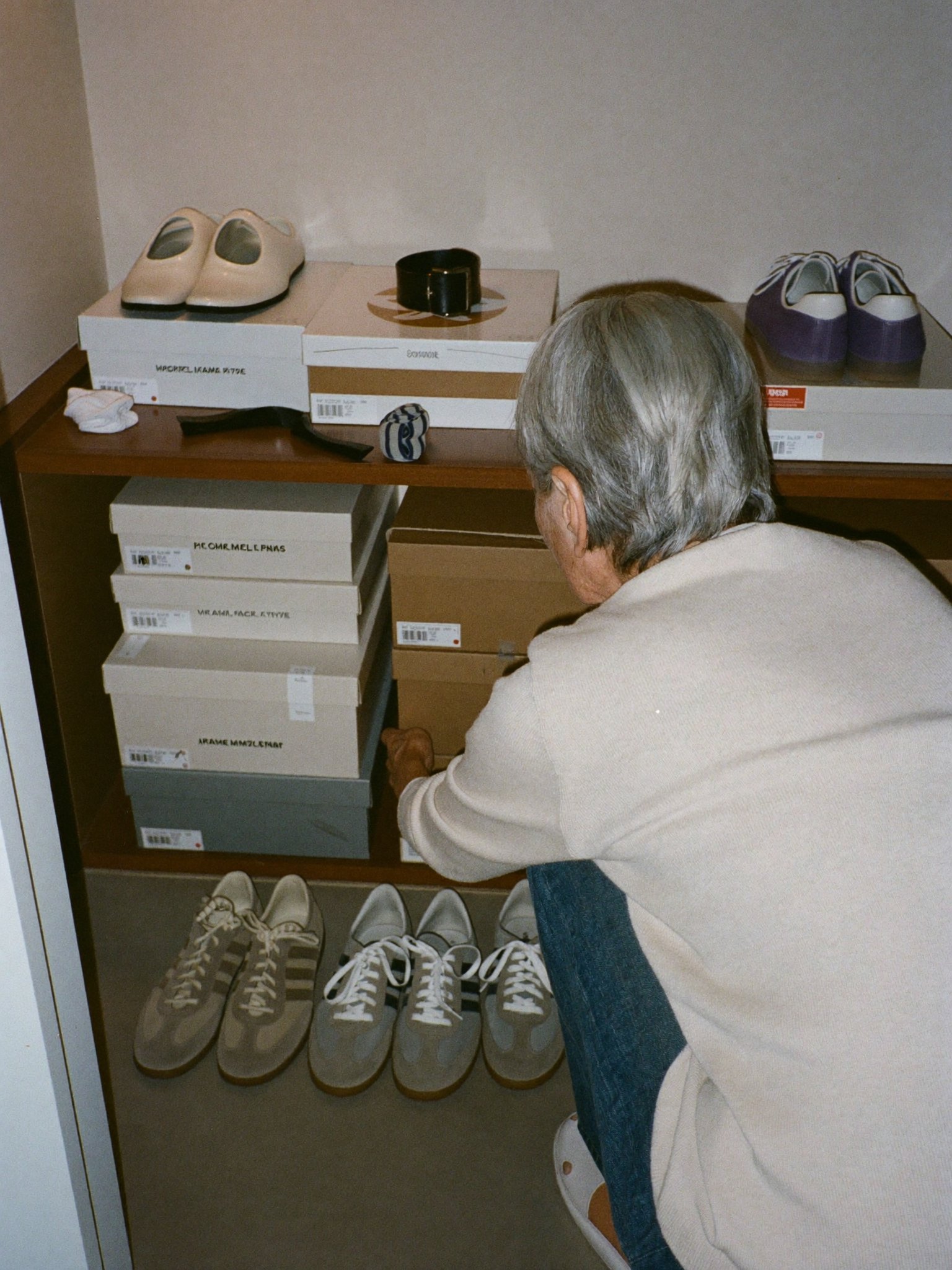
Every one of those shoes was built on the same tapered last. Different padding, same shape. So the padding kept changing and the squeeze never did.
What a foot-shaped last changes
- The widest point is at the toes. Your big toe sits straight, your little toe has a wall that is not leaning on it, and the bunion has air around it instead of knit pressing on it.
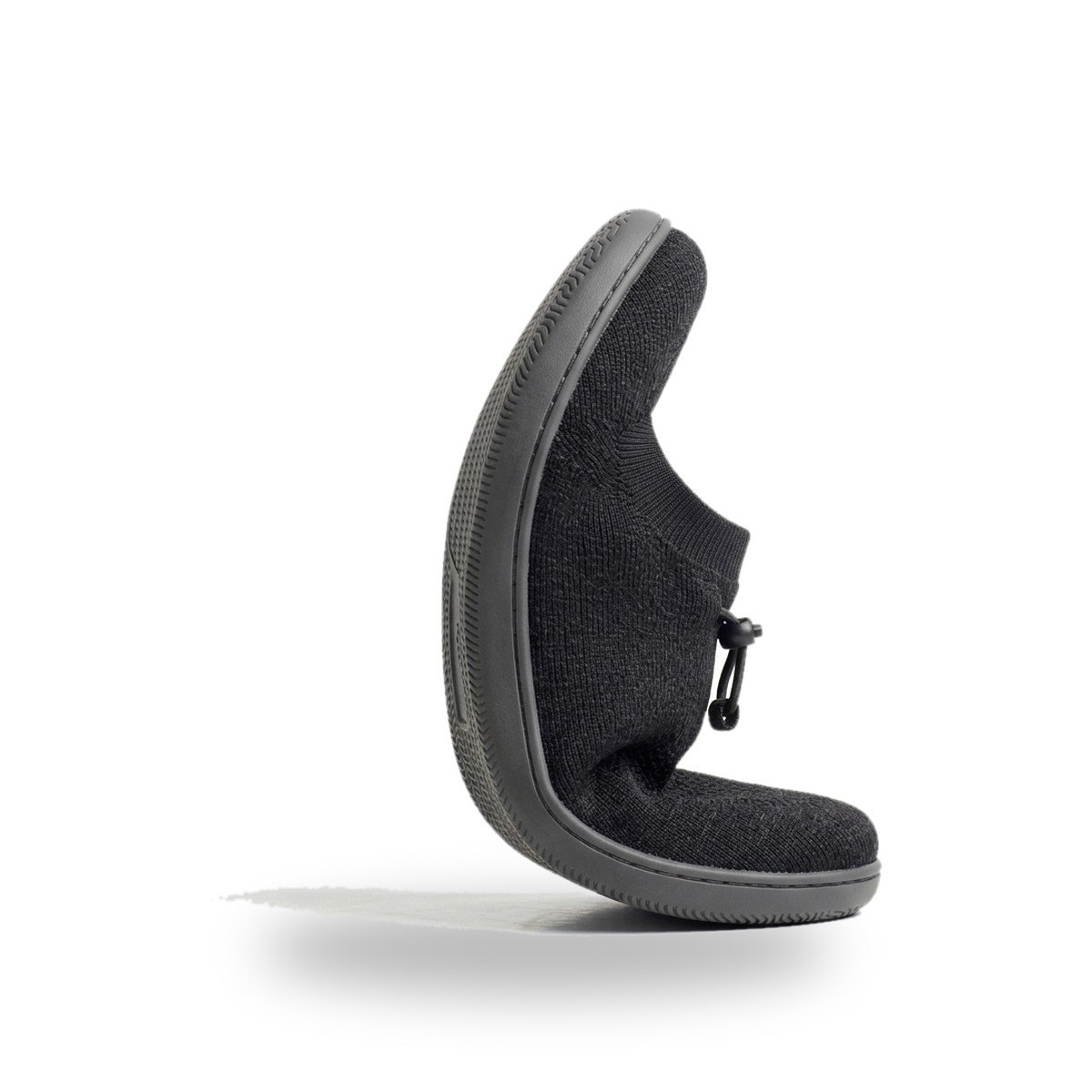
- The sole is flat and bends. No raised heel tipping your weight onto the forefoot, which is where the bunion is.
- The knit gives. A soft engineered knit stretches with the foot through the day instead of holding the morning shape until dinner.
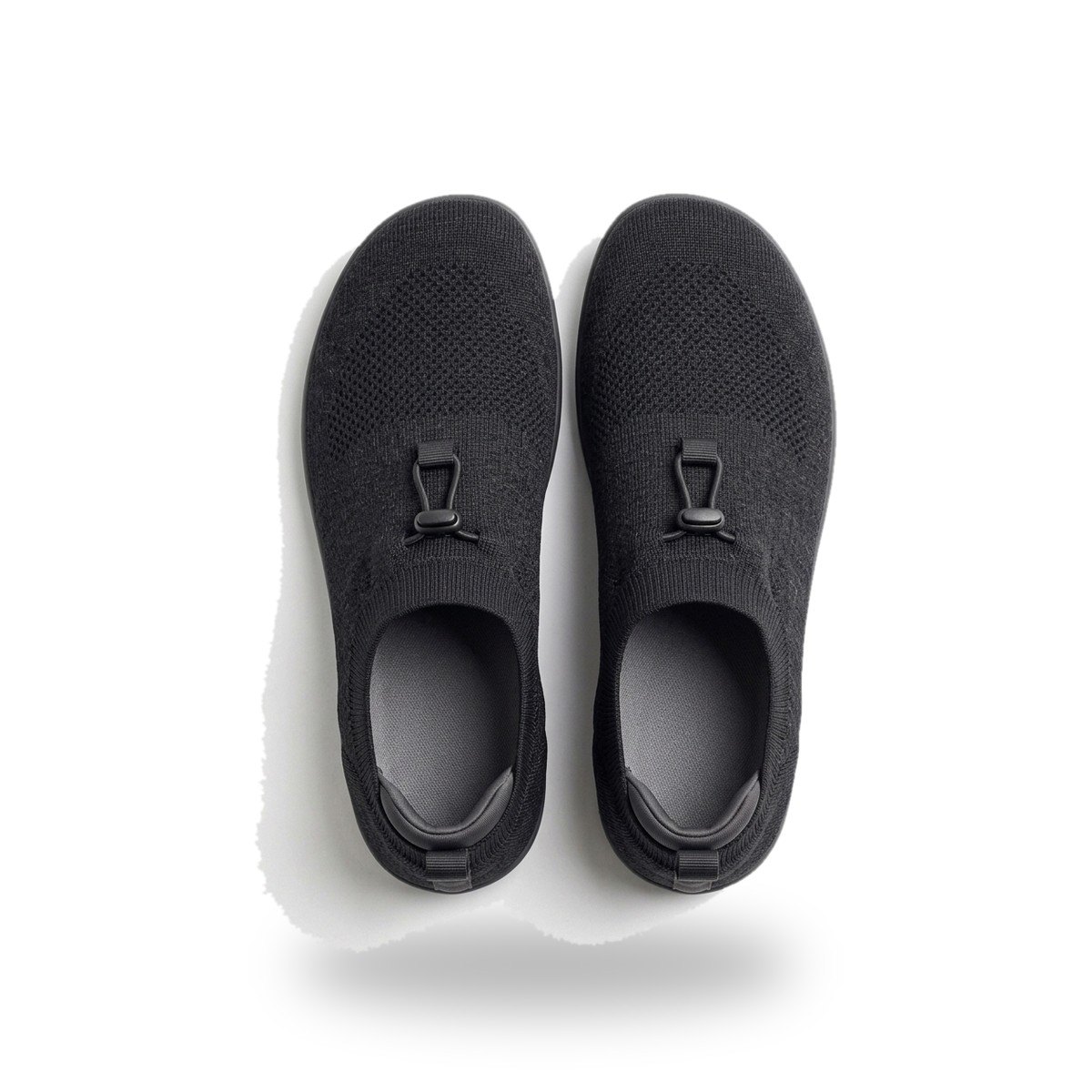
We built Ample Daily on that last
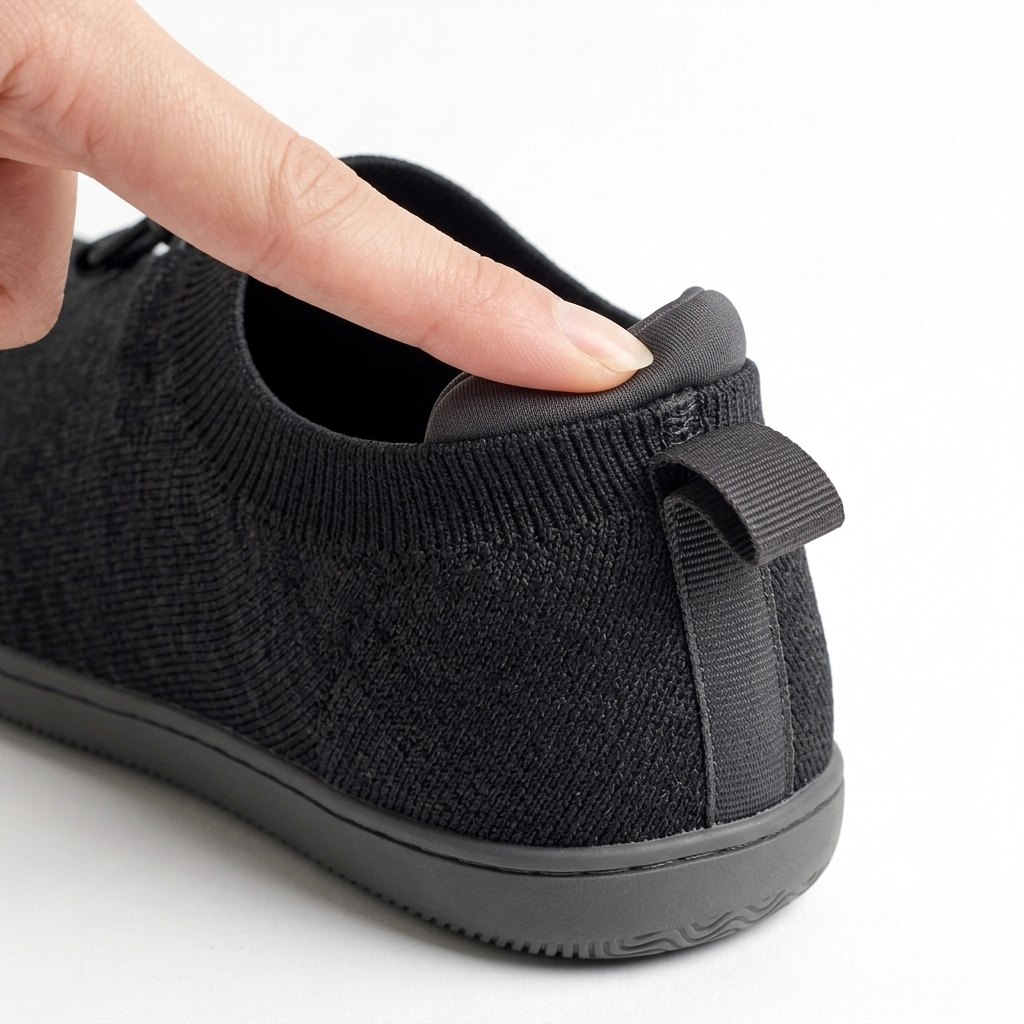
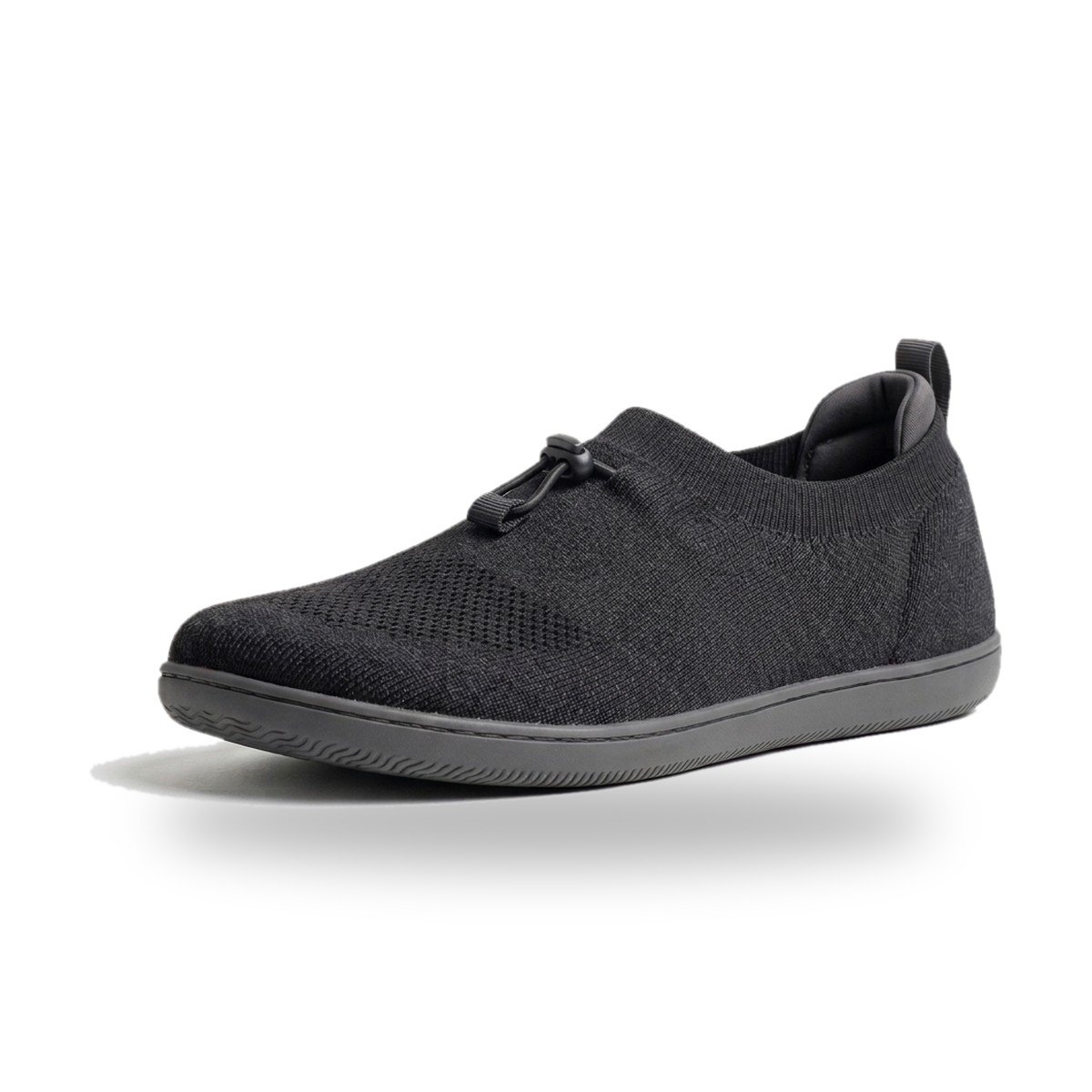
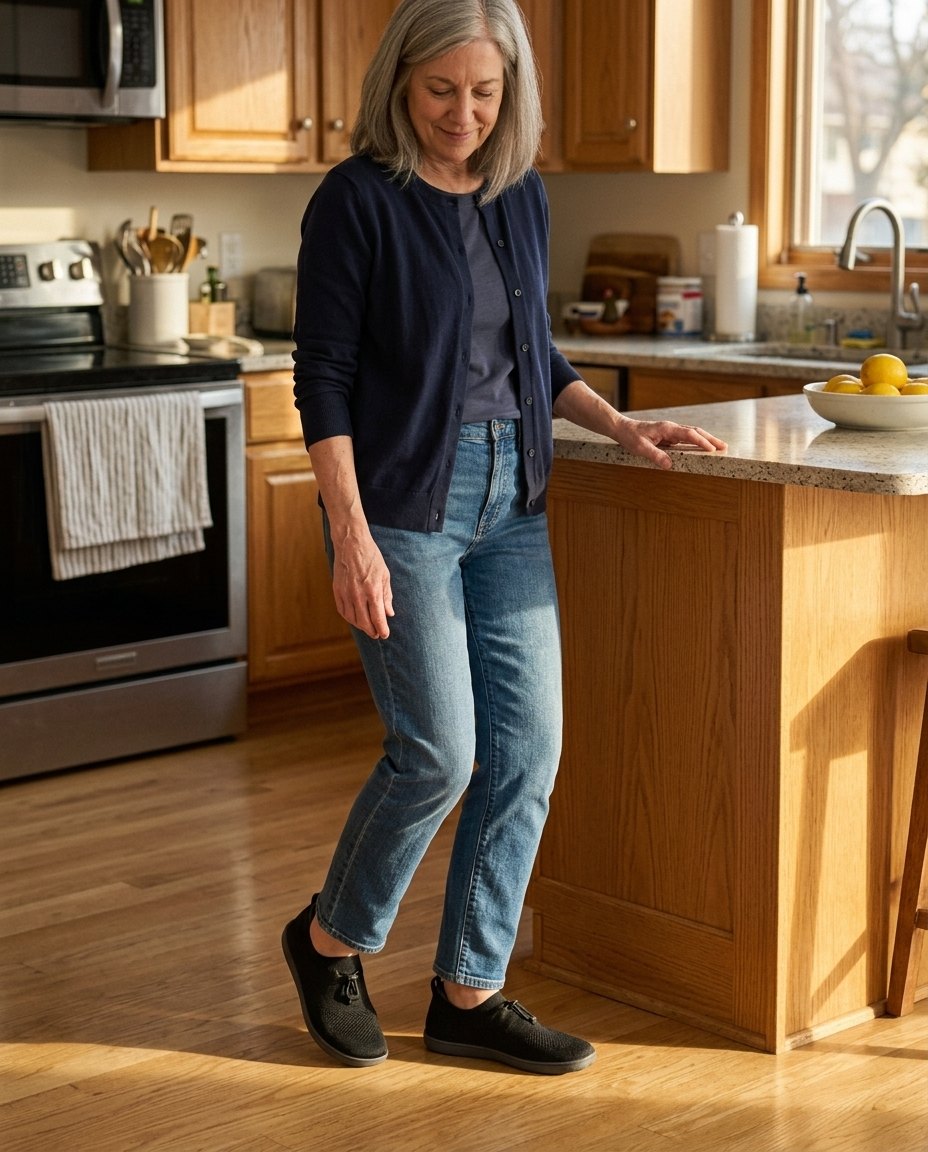
Ample Daily is an everyday slip-on sneaker built on a foot-shaped last: widest at the toes, flat and flexible underneath, with a soft heel you step into without bending. It comes in half sizes, true to size, because a bunion should not require guessing.
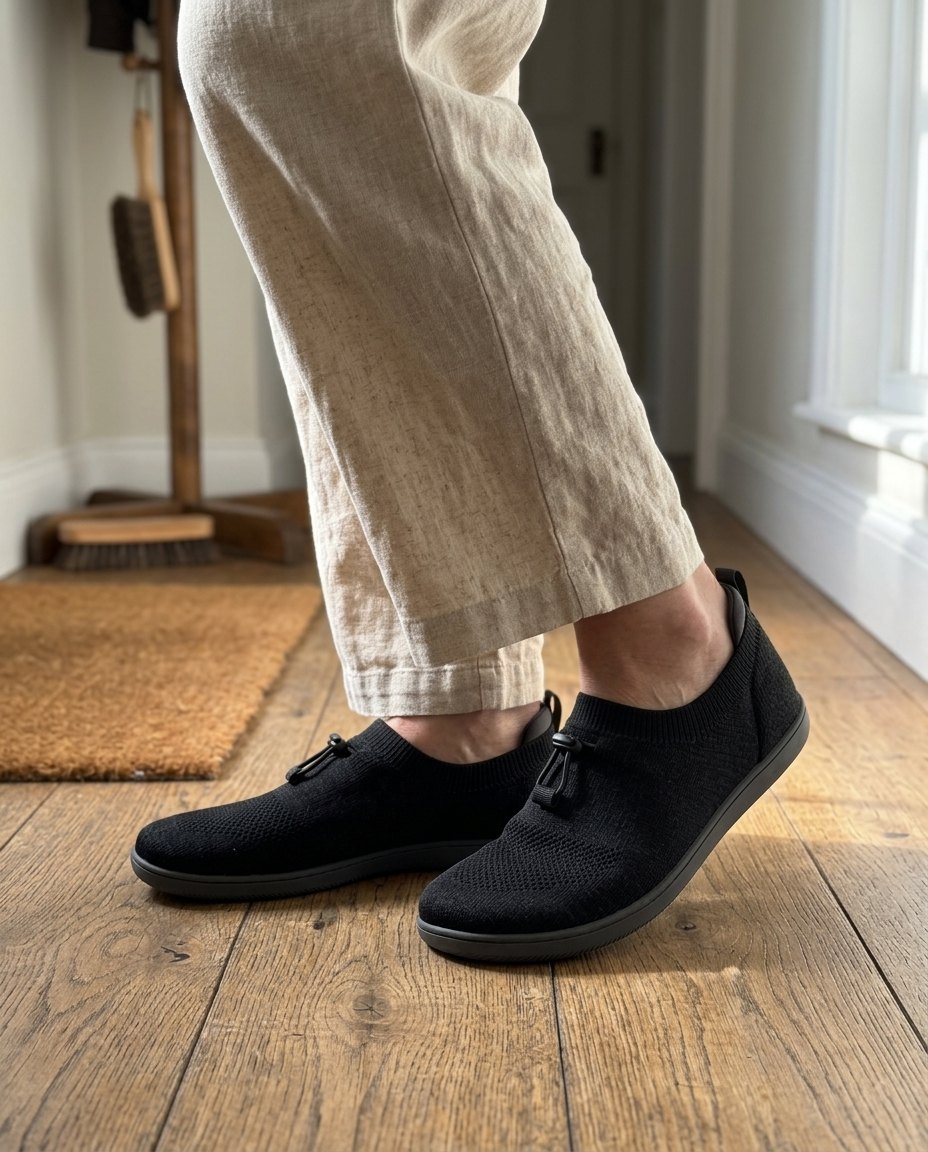
It is also, on purpose, a normal-looking shoe. Black, stone, oat, charcoal, navy, slate blue, sage or burgundy knit that goes with jeans and with a dress. Nobody at church needs to know it is the comfortable one.
The part we fixed before the shoe
We read thousands of one-star reviews of the comfort-shoe brands before we made anything. The most common complaint was not comfort. It was "runs small", "returns cost me $30", and "shipped from overseas, took a month". One leading brand prints "runs small, order 1 size up" on its own product page.
So the promise comes first. If the size is wrong, you exchange it free, with a prepaid label, from our US warehouse. The new size ships the moment the carrier scans your return. And you can wear them outside for 30 days and still send them back.
Who it is for, and who it is not for
| You | Verdict |
|---|---|
| Bunion, wide forefoot, toes that get squeezed | Yes. Take your usual size; a large bunion, take the half size up. |
| Feet that swell by afternoon | Yes. The knit gives. |
| You want maximum cushioning for running | No. This is a flat everyday shoe. |
| Your doctor prescribed a rigid support | Ask your doctor first. The insole lifts out for low-profile orthotics only. |
If you have spent $700 finding out that "wide" was the wrong answer, the shape is the thing to try next. And trying it costs you nothing but a walk.
Questions readers ask
Will my usual size fit a bunion?
Most bunions fit in your usual size because the last is widest at the toes. For a large bunion, take the half size up. Either way the exchange is free.
Is one width enough?
The last is roomy from the start, so one width covers standard through wide. Women who took EE in tapered shoes usually take their normal length here.
What if it's still not right?
Wear them outside for 30 days. Return them for a refund or swap the size free with a prepaid label. No 'unworn only' clause.
How to try Ample Daily at the best price (and free shipping)
- True to size, half sizes. Wrong size? Free exchange from our US warehouse
- 30-day walk test: wear them outside, still return them
- Free US shipping · 1-year sole and upper warranty
- A person answers your email within 24 hours
Introductory price ends after launch week. We will say when. No fake countdown.
This is an advertisement and not an actual news article, blog or consumer protection update.
Sponsored content from Ample Footwear. Ample shoes are comfortable, roomy, flat footwear. They are not medical devices and do not treat bunions, plantar fasciitis, neuropathy or any other condition; if you have a foot condition, ask your doctor which shoe shapes suit you. Forum wording is paraphrased from public posts. People pictured are models. Product images are pre-production renders.